
.svg)
.svg)
%201.svg)
%201.svg)
.svg)

.svg)
.svg)
.svg)
.svg)

.svg)
Poverty Inequality
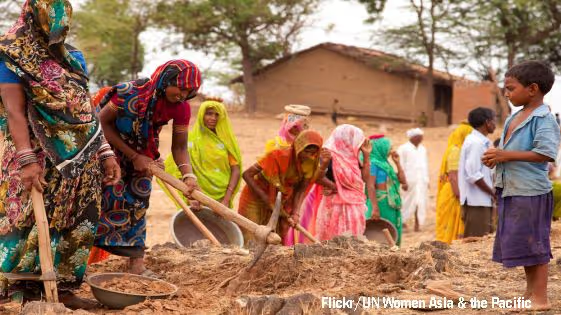
Covid-19: How well are government schemes supporting Bihar’s vulnerable populations?
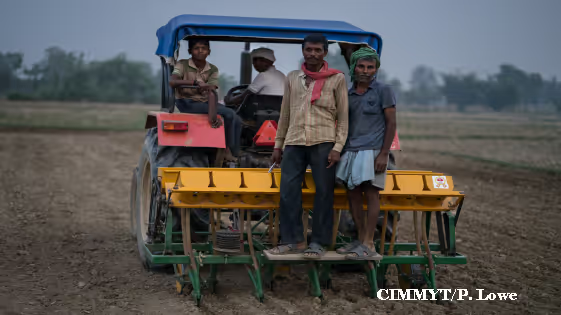
The immediate adverse impact of the Covid-19 pandemic and associated lockdown was visibly greater for migrant workers and their households, whose ability to access government schemes in their villages of origin was uncertain. Analysing data from a survey in rural Bihar in June-July 2020, Sarin et al. find that household with migrants were more likely to cut down on food and suffer from mental health issues – even as they reported higher incomes than non-migrant households.


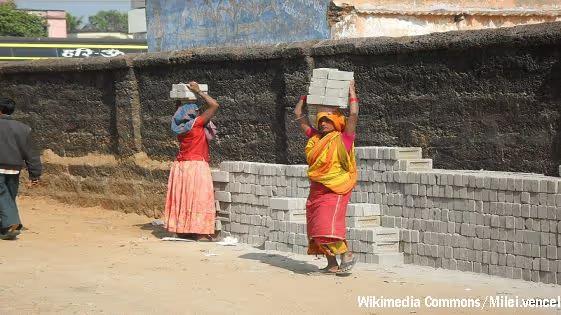
DUET re-examined
In September 2020, Jean Drèze’s proposal for an urban work programme called DUET (Decentralised Urban Employment and Training) was presented on I4I. This was followed by an extensive symposium in whicheminent economists and practitioners provided their perspectives on the proposal. In this post, Drèze updates his original proposal in one important respect, by suggesting that the programme should be run by and for urban women. Responding to some of the key comments and questions of the symposium contributors, he argues that the best way to assess the efficacy of DUET in practice is to give it a chance.

DUET: Employment programme in public works in small towns
Given the severe problems of unemployment and under-employment in urban India, particularly among the country’s burgeoning youth population, Pranab Bardhan emphasises the need for an employment programme in urban public works. In his view, such a programme should be inclusive, local government-driven, and prioritise projects that serve environmental and health goals in small towns.
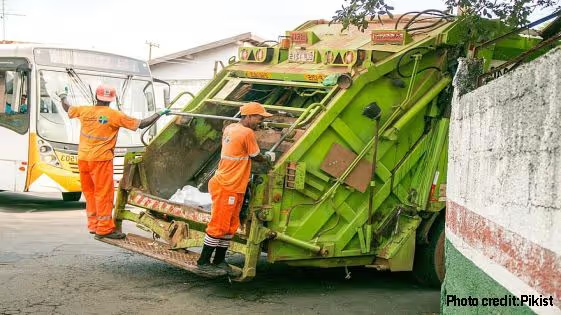
DUET: Towards employment as a universal right
Debraj Ray contends that we should push forward with the agenda of employment as a universal right, and DUET would move that needle. He discusses two aspects of the proposal – keeping track of workers, and keeping track of projects.
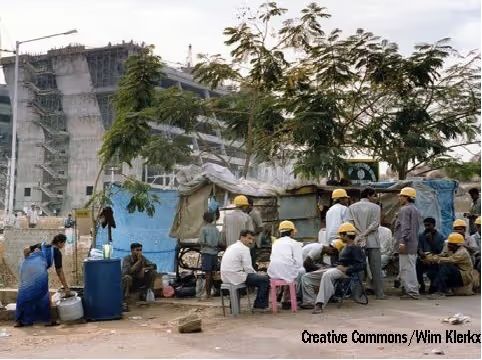
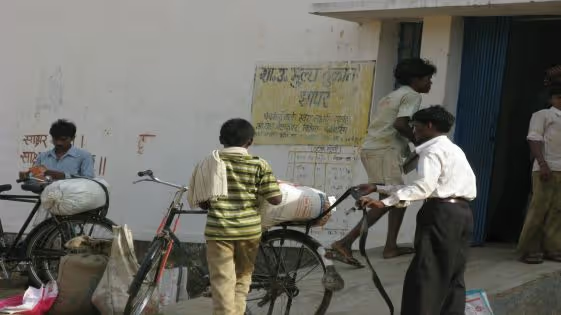
A review of the coverage of PDS
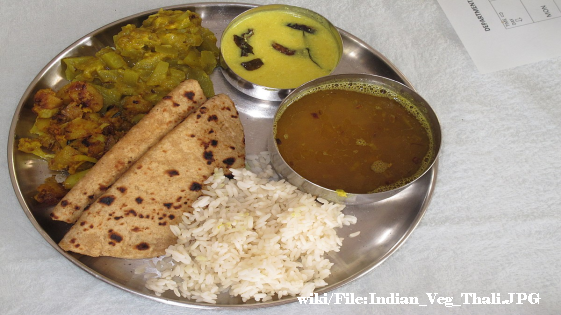
The coverage of the Public Distribution System (PDS) has been of wide interest due to the pandemic and lockdown. Based on government data sources, Khera and Somanchi estimate the state-wise coverage of PDS and map the categories of food support. They find that despite the expansion of PDS with the enactment of the National Food Security Act, and state ‘top-ups’ beyond central support, over 400 million people are excluded from it.
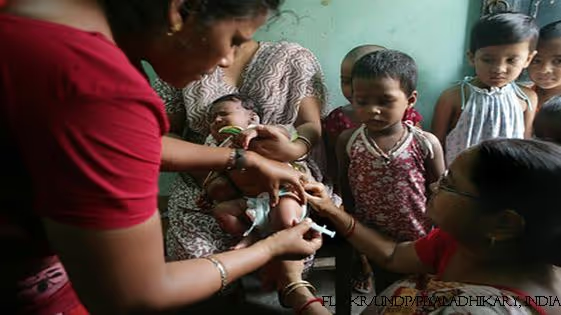
Covid-19: Willingness to vaccinate among slum-dwellers
Vaccination is among the success stories in modern-day medicine, and is seen by the WHO as a key element of the response to the Covid-19 pandemic. In this note, Augsburg et al. discuss findings from a survey of 4,000 slum dwellers in two cities of Uttar Pradesh, on their willingness to vaccinate and pay for it. They contend that, as billions are poured into a vaccine’s development and tackling supply difficulties, policymakers should also prepare for the next challenges: compliance and ability to pay.
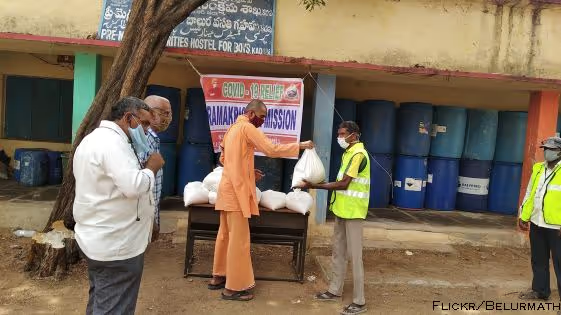
Covid-19: How long can consumption be sustained in lockdown?
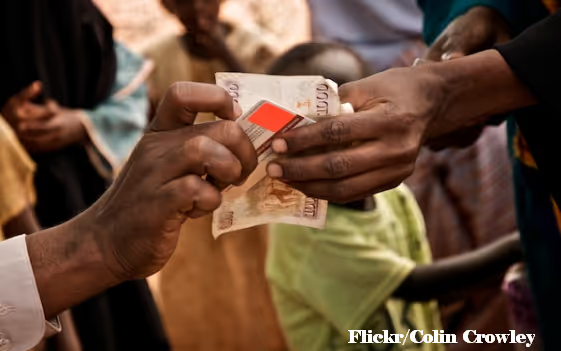
In May 2020, the Finance Minister announced an economic relief package totaling Rs. 20 trillion, in response to the Covid-19 crisis. However, the actual stimulus is estimated to be only 1.3% of GDP. In this post, Khan and Abraham assess the earning loss of workers during different phases of the lockdown, and contend that, even if we consider just the earning loss of workers in the informal sector, the actual stimulus in the package should have amounted to at least 3% of GDP.
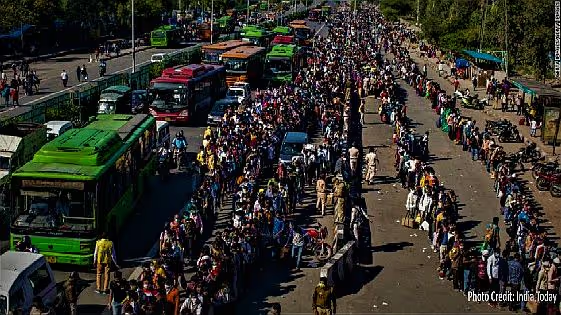
Pandemic as a lens: Identifying and addressing livelihood vulnerabilities
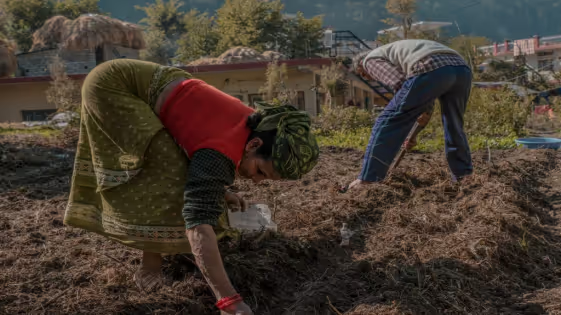
Based on the findings from a phone survey of around 5,000 Indian workers, the authors explore the impact of the Covid-19 economic lockdown on two forms of livelihood vulnerabilities: employment insecurity and food insecurity. They argue that the policy response needs to go beyond addressing the immediate consequences of this specific shock; this juncture posits the need for structural reforms that seek to address and fill these gaps concretely rather than suturing temporarily.


Sign up to our newsletter to be notified about the latest updates
.svg)
Just One Step Away!
Complete your signup to start getting the latest news, stories, and updates delivered straight to your inbox.