
.svg)
.svg)
%201.svg)
%201.svg)
.svg)

.svg)
.svg)
.svg)
.svg)

.svg)
Poverty Inequality
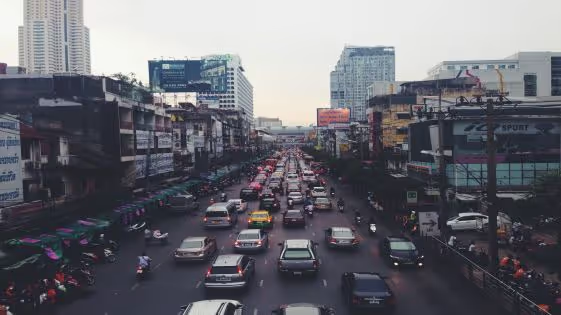
Focussing on inequality of opportunity to sustain India’s growth
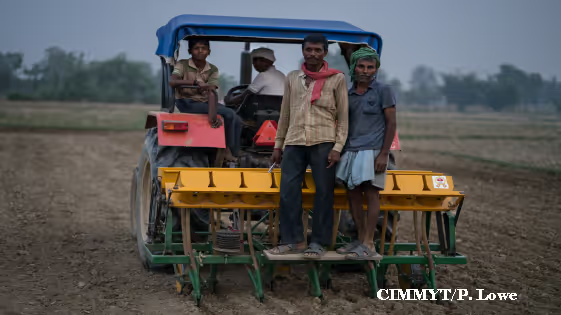
India has seen a four-fold increase in average incomes since 1990, which has reduced the share of the population living in absolute poverty from 45% to 20%. Yet, there are large and widening inequalities in incomes and opportunities. Analysing microdata from the National Sample Survey, this article provides estimates of the ‘locational premiums’ that residents can earn merely by belonging to a richer sub-region.


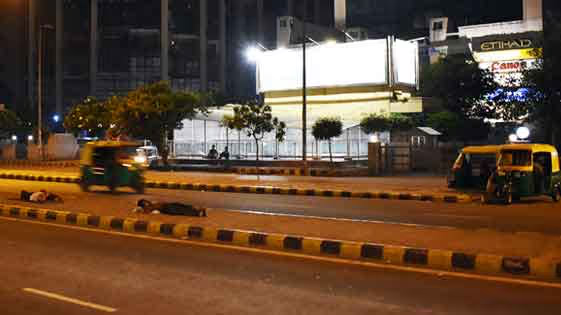
How has the Covid-19 crisis affected the urban poor? Findings from a phone survey - III
While the devastating impact of the second Covid-19 on public health in India is well-known, there is relatively little evidence on its economic and psychological dimensions. Based on surveys in industrial clusters of Delhi, Afridi et al. examine the dynamic effects of the different phases of the pandemic, on livelihoods and mental health of poor, informal workers – and how the experiences of women and men compare.
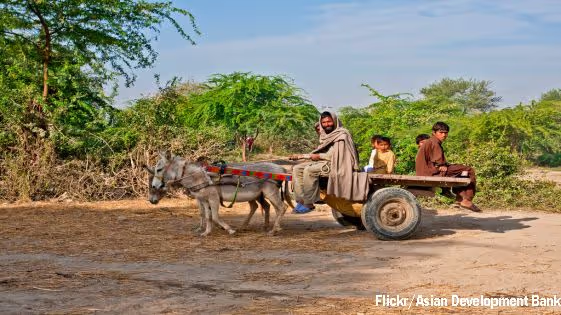
The changing demand for welfare in rural Pakistan
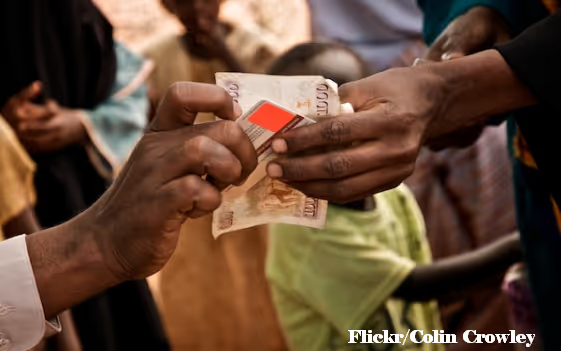
The proliferation of cash transfer programmes in developing countries has raised concern regarding a crowding-out effect on citizens' demands for investment in universal public services. Based on a household survey in rural Pakistan, this article shows that this is not necessarily true. It notes important sub-national differences in programme effects, with greater positive spillovers in settings where public services are functional and valued by citizens.
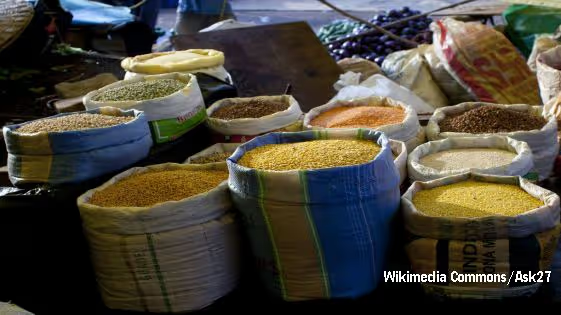
The Covid-19 crisis and food security
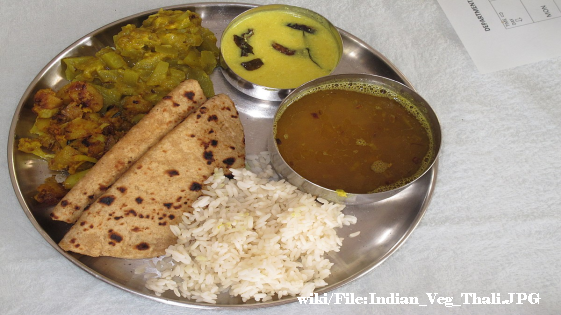
India’s national lockdown in 2020, imposed to contain the spread of Covid-19, threw millions of people out of work and sharply reduced earnings for those who remained employed. Based on data from multi-state surveys, Drèze and Somanchi highlight the devastating impact of the pandemic on food security, and make a case for stronger relief measures.
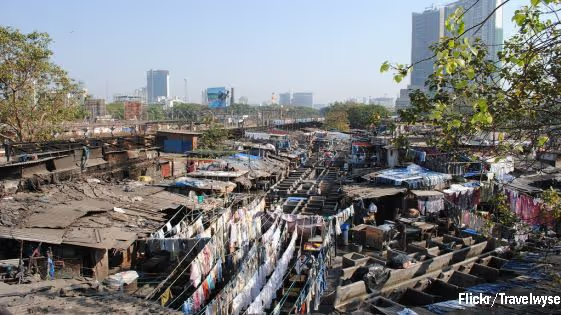
Covid-19: Health and economic impacts in Indian slums
Initial predictions suggested that slum communities – densely packed, with shared water taps, and an impossibility of social distancing – would be particularly hard-hit by Covid-19. In this note, Downs-Tepper, Krishna and Rains, use data from surveys in 40 slums across Bengaluru and Patna, to track the health and economic impacts of the pandemic on these vulnerable communities, and to understand the strategies employed by residents to cope with these impacts over time.

Examining district-level performance of Ujjwala: The case of Chhattisgarh and Jharkhand
Launched in 2016, Pradhan Mantri Ujjwala Yojana (PMUY) aims to encourage the adoption of liquefied petroleum gas (LPG) for cooking. Using National Sample Survey data for 2014 and 2017, this article examines the impact of PMUY in two states with low LPG usage – Chhattisgarh and Jharkhand. It finds intra-state disparities in LPG usage and PMUY enrolment: regions with relatively low usage rates pre-PMUY had low enrolment, with higher enrolment in urban than in rural areas.
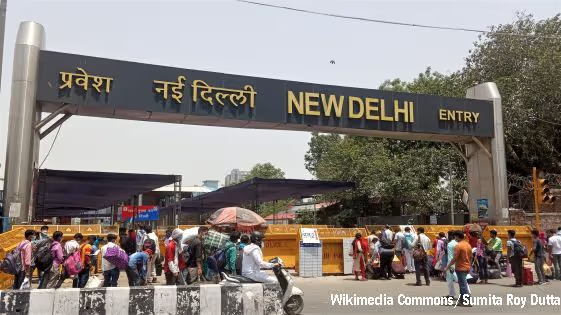
How many jobs were lost in urban India during lockdown?
The nationwide lockdown imposed in March 2020 to contain the spread of Covid-19, disrupted economic activity – particularly in urban India. Using data from the Periodic Labour Force Survey for the period April-June 2020, Mitra and Singh examine job losses in urban areas. They find that the secondary and tertiary sectors were more adversely affected than agriculture, and more women than men dropped out of the labour force.
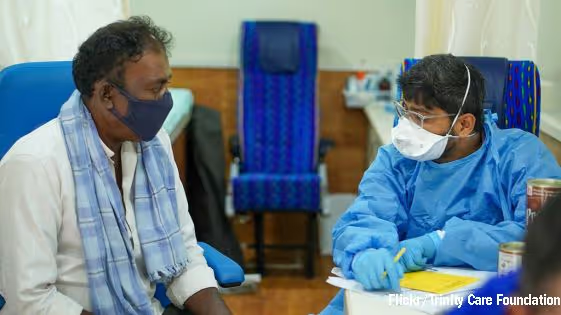
Covid-19: Addressing stigma and misconceptions
Throughout the Covid-19 pandemic in India, there has been stigmatisation of patients and their families, and discriminatory attitudes towards marginalised groups as well as frontline workers. Based on an experiment conducted in Uttar Pradesh during June-August 2020, this article shows that providing reliable and focussed information on the transmission of the Virus can play an important role in addressing associated misconceptions, stress, and stigma.
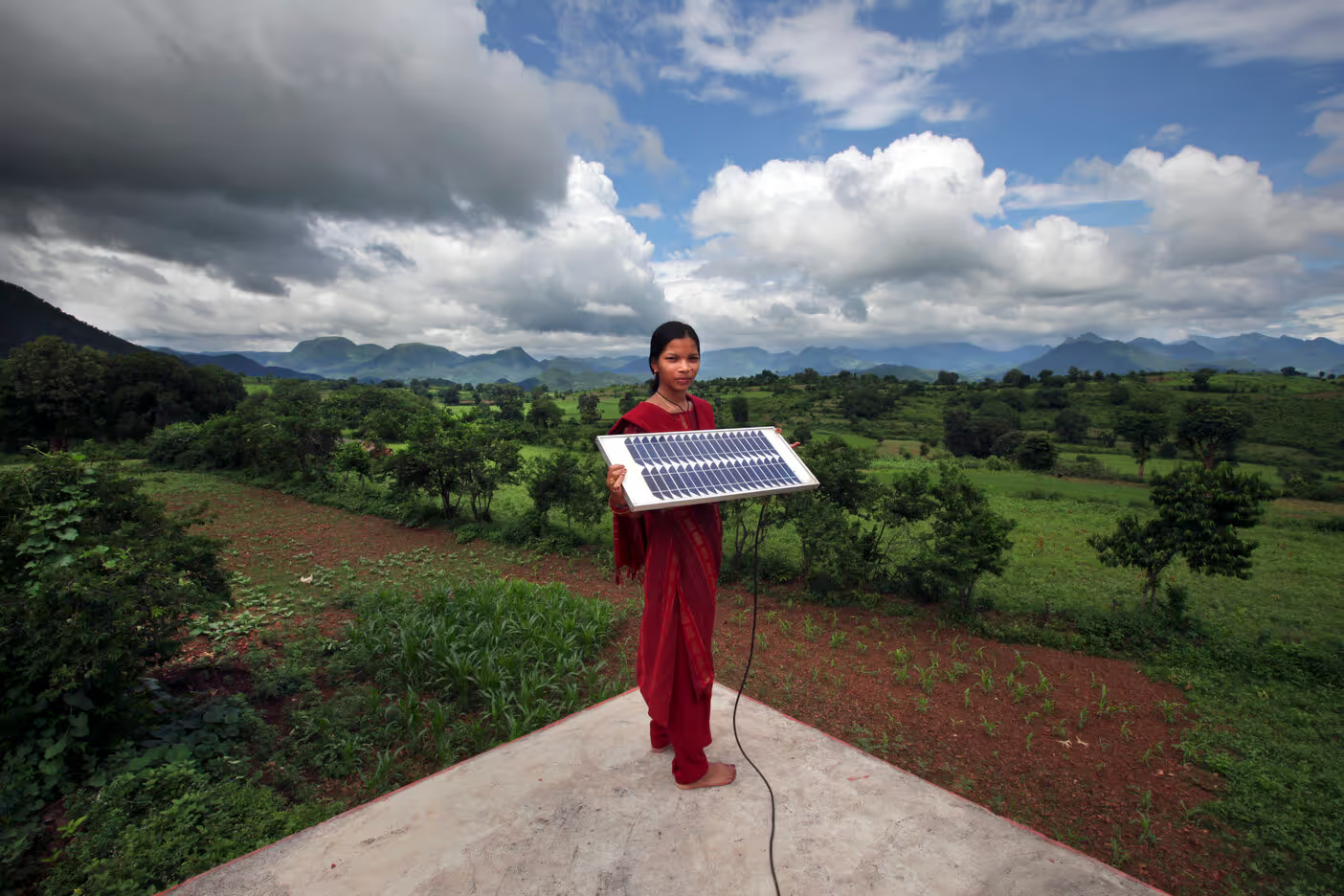
Energy access for marginalised communities: Evidence from rural India
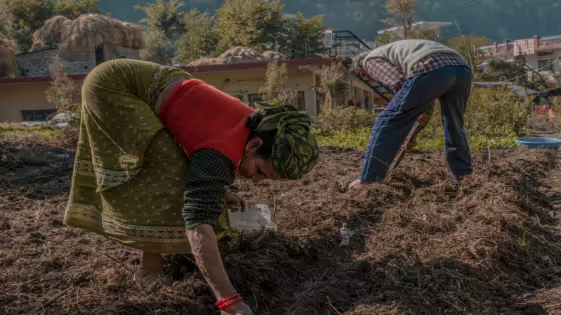
While overall energy access of Indian households has improved rapidly over the past decade, access to clean fuel is still low as compared to electricity. Besides, social structures and hierarchies continue to substantially influence rural development processes in the country. Using data from a household panel survey conducted in six Indian states during 2015-2018, this article analyses inequities in access to clean fuel and electricity among scheduled castes/tribes.
Sign up to our newsletter to be notified about the latest updates
.svg)
Just One Step Away!
Complete your signup to start getting the latest news, stories, and updates delivered straight to your inbox.