
.svg)
.svg)
%201.svg)
%201.svg)
.svg)

.svg)
.svg)

Building State capacity for accelerating development through effective governance
.svg)

.svg)

Governance

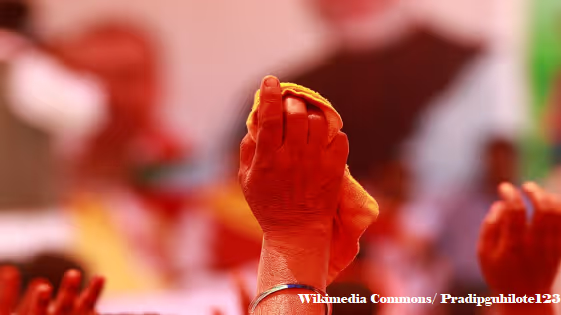
Regionalist party representation and tribal insecurity
Observers have long been ambivalent about regionalism as a principle underlying the organisation of politics. Analysing data from India, this article shows that when regionalist parties win elections, there is an increase in local violence, caused by heightened insecurity among local minority groups. This is found to be especially true for electoral constituencies with significant populations of scheduled tribes who have no mandated political representation.


Combating corruption and illicit outflows: A welfare-oriented approach
A discussion of the association between corruption in economies and leakage through illicit outward flows – with important implications for welfare – is missing in the literature. Based on a theoretical framework, this article analyses how policies for controlling corruption, such as the licensing fee, are influenced by the propensity for proceeds from corruption to leak out of the economy.
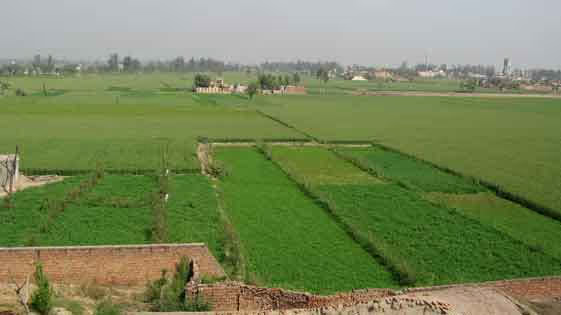
Land disputes in ‘Santhal Parganas’: Issues and solutions
Four of the six districts in Santhal Parganas division of Jharkhand have been classified as ‘aspirational districts’ by NITI Aayog. In this note, Karn Satyarthi describes the unique manner in which land revenue administration works in the division, and the problems involved in land dispute resolution. He suggests methods to address these systemic issues, and contends that this would constitute a major factor-market reform in the division.
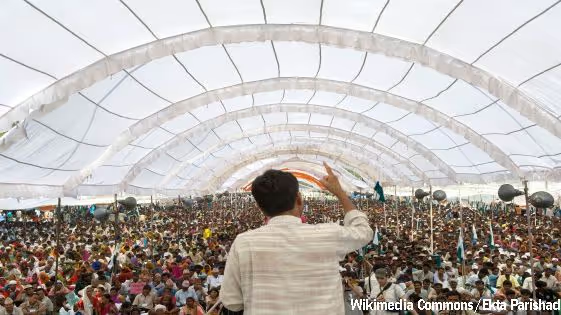
Ethnic identities, public spending, and political regimes
Do democracies discriminate less against minorities as compared to non-democracies? How does the dominance of an ethnic group affect discrimination under various political regimes? Presenting a theoretical model to address these questions, this article shows that political regime changes can favour or disfavour minorities – in terms of allocation of spending on public goods – depending on the size of the ethnic majority.
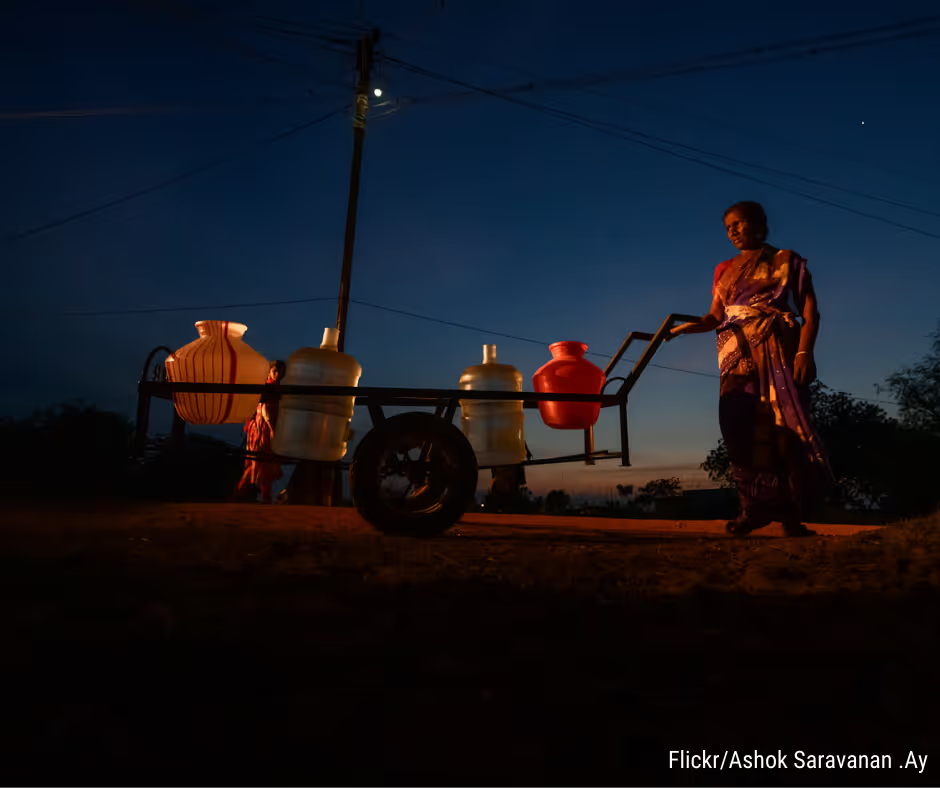
Diversity and public goods: Why the geographical unit of analysis matters
Research has shown that regions with higher caste diversity have lower share of villages with essential public goods. This article challenges this finding and shows that empirical models estimated at higher levels of geographical aggregation mask a considerable amount of variation. Any meaningful statistical relationship between diversity and public goods needs to be sensitive to geographical scale as the nature of local politics plays an important role.

Does the right to vote affect political behaviour? Historical evidence from India
Democracies are known to have better economic development outcomes over the longer run. However, it is not clear whether giving citizens the right to vote is sufficient for ensuring an effective degree of political participation or competition. Creating a novel, district-level dataset from 1921-1957, this article examines how political behaviour is shaped by two class-based extensions of voting rights in India.
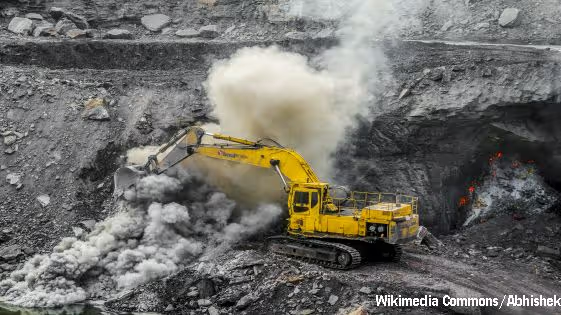
Digging for dirt: Rent-seeking among elected politicians in India’s mineral belt
The Indian mining industry is no stranger to corruption scandals and every year dozens of environmental activists are murdered for exposing illegal mining activities. This article discusses the impact of mining on political behaviour and finds that mineral rent booms increase the likelihood of criminally charged politicians entering office (adverse selection) and result in increased assets of politicians already in office (moral hazard).
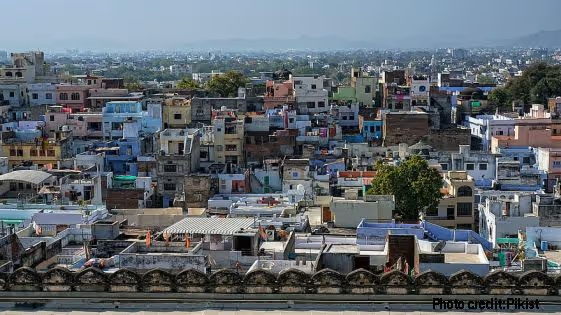
DUET: Decentralise employment generation to urban local bodies
Dilip Mookherjee supports Drèze’s suggestion to decentralise employment generation to urban local bodies, and contends that the moribund nature of urban local government is a key reason for the neglect of urban renewal, sanitation, and public health so far. However, more thought needs to be devoted to issues of corruption and potential for politicisation, as well as funding.
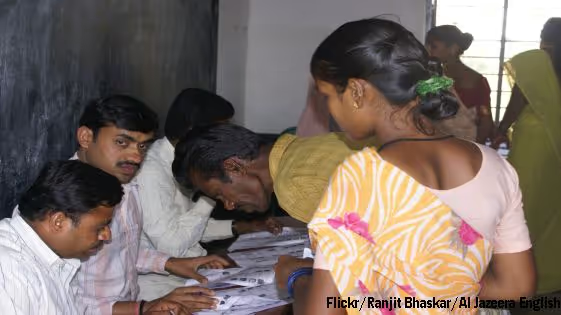
Synchronised elections, voter behaviour, and governance outcomes
An active policy proposal of the Government of India is to hold national elections at the same time as the assembly elections of all the states. This article examines whether holding national and state elections simultaneously affects voter decisions, and consequently, electoral outcomes in India. It finds that synchronised elections increase the likelihood of the same political party winning constituencies in both tiers by 21%.

Sign up to our newsletter to be notified about the latest updates
.svg)
Just One Step Away!
Complete your signup to start getting the latest news, stories, and updates delivered straight to your inbox.