
.svg)
.svg)
%201.svg)
%201.svg)
.svg)

.svg)
.svg)
.svg)
.svg)

.svg)
.svg)
.svg)




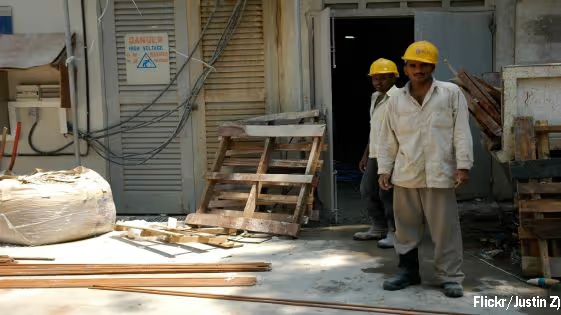
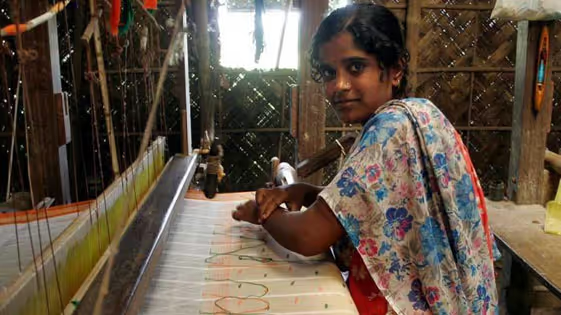
When individuals are rationed out of the labour market, this not just decreases welfare but can also create labour misallocation as rationed workers may turn to less-productive self-employment activities. This behaviour of rationed workers has been referred to as “disguised unemployment” and more recently as “forced entrepreneurship”. In a developing country with high self-employment, an individual who cannot find work in the casual labour market may report spending time on their household enterprise, making it difficult to distinguish true productive self-employment from disguised unemployment or forced entrepreneurship. This project uses a novel experimental methodology to quantify labour rationing in rural labour markets, and decompose it into involuntary unemployment and forced entrepreneurship.


































































.svg)

.svg)
%201.svg)
.svg)
.svg)
