
.svg)
.svg)
%201.svg)
%201.svg)
.svg)

.svg)
.svg)
.svg)
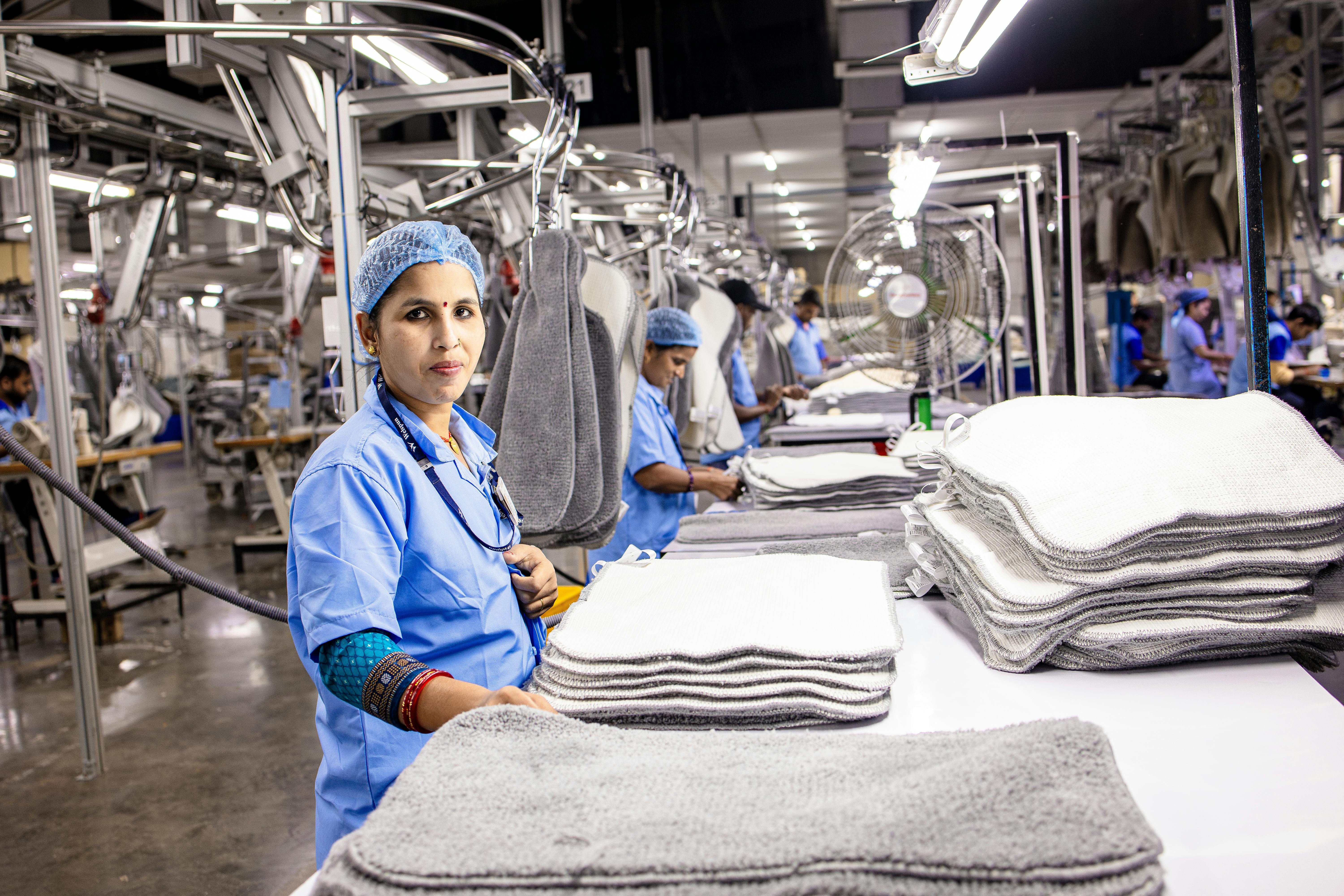
Night shift bans and female employment in Indian manufacturing
.svg)

.svg)



Productivity and Innovation
‘Outside’ managers’ productivity, firm dynamics, and economy growth
In developed countries, many industrial giants have humble beginnings as small, family-owned businesses, but nonetheless expand to hundreds of thousands of employees over time by relying on professional managers running key operations. Why does this not occur to the same degree in India? This article explores how the lower productivity of ‘outside’ managers in developing economies impacts firm growth.


Expectations, wage hikes, and worker voice
Understanding how exit decisions of workers are affected by their ability to voice their concerns, is a central question in labour economics. Based on an experiment in 12 garment factories in Karnataka around the time of a wage hike, this article shows that providing workers a channel to express grievances – through an anonymous employee satisfaction survey – reduces quit rates, especially for those most disappointed with the wage hike.
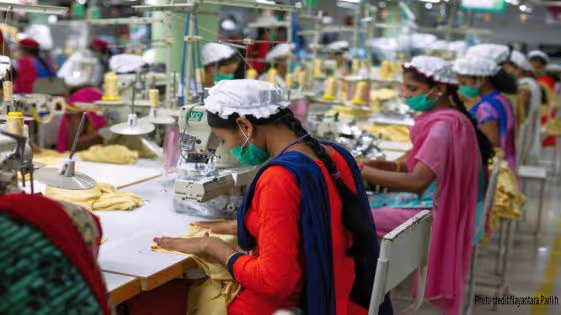
No line left behind: How firms match workers and managers
Various studies consistently affirm the importance of strong worker-manager dynamics in driving productivity. Based on analysis of worker-level productivity data, information on orders, and interviews with managers of a large garment manufacturing firm in India, this article suggests that when it comes to labour-allocation decisions, productivity sometimes takes a back seat to managing complex relationships with buyers, who can take their business to the factory down the road.

Managerial quality and productivity dynamics
It is well known that managerial quality impacts firm productivity and growth. Which managerial skills, traits, and practices contribute most to productivity? Are all such traits easily observable? Are such traits appropriately rewarded in pay? Based on two years of daily, line-level production data from a large Indian garment firm and rich survey data on line managers, this article seeks to address these questions.

Does India gain from high-skilled migration to the US?
India is the most important source of migrants globally, and the US is the main host country for its high-skilled migrants. Is the phenomenon of high-skilled emigration ‘brain drain’, or is it creating potential providers of ‘knowledge remittances’ for the home country? Based on data on US immigrant inventors from India, this article investigates the rate and determinants of return migration.

The changing task content of jobs in India
The ongoing wave of technological revolution across the globe is set to fundamentally change the way goods are produced and services are delivered. Using a task-based framework, this article seeks to examine the impact of technology on the nature of jobs in India. It finds that in keeping with global trends, non-routine cognitive task intensities of jobs have increased, and manual task contents – both routine and non-routine – have declined.
Mapping the Urban World: Integrating High-resolution Satellite Imagery and Night Light Data
This project aims to improve current approaches to chart urban extent across the globe by integrating night light (NTL) data with Landsat 30m resolution satellite images. By applying state-of-the-art machine-learning techniques, this project hopes to produce a comprehensive global mapping of urbanization in close to real time.

An offline alternative for Aadhaar-based biometric authentication
While decision on the constitutionality of Aadhaar by the Supreme Court of India remains a matter of speculation, it has become abundantly clear that most of the use cases for Aadhaar-based biometric authentication (ABBA) have turned out to be deeply problematic. In this post, Banerjee and Sharma outline the tentative design sketch of an alternate offline protocol, with digitisation and identity verification objectives similar to ABBA, which may be more accurate and free of the negatives.
The impact of robotisation on the world economy: A forward-looking review
Robots have long existed in human imagination and only recently in the real world. The baggage of past imagination often intrudes into our understanding of how real robots will affect our economic lives. This explainer rigorously defines ‘robots’ and artificial intelligence; presents empirical evidence and analysis on the impacts of robotisation on production processes and aggregate economic outcomes; and puts forth policy recommendations for ensuring social benefits from robotisation at minimal cost.

Sign up to our newsletter to be notified about the latest updates
.svg)
Just One Step Away!
Complete your signup to start getting the latest news, stories, and updates delivered straight to your inbox.